
HOME

• Quick Picks

• Roger's Choice
• Under £5
• Top 20 Sellers
• New Books
• Special Reviews
HOME |
|
• Quick Picks • Roger's Choice • Under £5 • Top 20 Sellers • New Books • Special Reviews
|
 HELP |
| Roger's
Active Learning Bookshop All profits go to Save the Children. [View total] |
||
|---|---|---|
 |

  |
 |
|
Learning to
learn is probably the most enduring and empowering
consequence from
experiential learning. You may prefer to think of this as 'unlocking
potential'.
Goleman (see below) talks about 'tipping the balance' and 'critical
mass'
beyond which people become ... well, whatever your favourite phrase is
for fully
functioning emotionally intelligent interdependent lifelong learners -
exciting people who are nice to know?
There are (of course) many more ways of looking at learning to learn. This is just the start of an infinite list ... |
|
|
| L2L handbook
for facilitators by Mark Taylor and Paul Kloosterman This 52 page book is free to download as a pdf document. |
Between November
2008 and October
2010, a European network of seven organisations has joined its efforts
to develop, implement and analyse innovative approaches in the field of
nonformal adult education aimed at the development of the competence enabling
the learners to plan, organise, implement and assess their own
learning, in particular in view of self-directed learning. The project considers learning to learn as the most crucial key competence for lifelong learning and, therefore, wants to support educational staff to acquire and develop competences and methodologies needed for implementing this concept of learning. It has benefited from financial support through the Grundtvig Action of the Lifelong Learning Programme of the European Commission. |
 |
One of the few to sense the flaws in our learning/ teaching structures, Guy Claxton reveals what it takes for learning to occur. An important book for anyone willing to believe that we may not have the optimal system at present. Builds on the work done by John Holt and Tim Gallwey among others. (reviewed by kundalini at Amazon.co.uk) |
Product Description
Aimed at teachers of years 4 to 11 in the UK and overseas, Learning to
Learn's practical strategies for registering, retaining, recalling and
revising, are suitable for use with students in lessons. Working on the
premise that successful learning depends partly on knowing why you want
to learn, the first part of the book looks at motivation. How to learn
is the focus of the remainder. From slicing, mind mapping and learning
styles, through mnemonics, mind pegs and the seven keys of memory, to
reviewing, snowballing and recording, the art of learning is explored
and - using curriculum based examples - demonstrated. (Amazon.co.uk)
 
|
 |
Synopsis: Nobody wants to be a failure...but not everyone knows how to be a success. What do you need to do to become the best prepared person to meet your goals as a life-long learner? Learning to Learn: A Philosophical Guide to Learning will provide you with the intellectual and practical tools to become an expert learner. Dr. Lee Rademacher uses philosophy in everyday language to help you think critically about your motivations and desire for learning and to help you transform yourself from the inside out. Practical exercises help you to focus your energies on actually achieving your learning goals. In our age of competitiveness, everyone needs some basic tools to put themselves ahead of the others. Learning to Learn gives you those tools to increase your potential as a learner. (Amazon.co.uk) |
 |
Book Description:
User-friendly, interactive, accessible and practical, "Learning to
Learn" brings science and brain theory to the arena of teaching and
learning. Garry Burnett leads us through a compelling process to find
the best learning strategies for each individual - using both sides of
the brain and every aspect of the learning experience. Each unit has
detailed teacher plans, providing a structured, effective learning
cycle that will:
|
 |
Synopsis: Scientific evidence has added to our understanding of what it means to know, from the neural processes that occur, to the influence of culture on what we see and absorb. This text examines these findings and their implications for teaching, how we teach, and how we assess what our children learn. (Amazon.co.uk) |
 There was a time
when IQ was considered the leading determinant of success. In this
fascinating book, based on brain and behavioural research, Daniel
Goleman argues that our IQ- idolising view of intelligence is far too
narrow. Instead, Goleman makes the case for "emotional intelligence"
being the strongest indicator of human success. He defines emotional
intelligence in terms of self-awareness, altruism, personal motivation,
empathy and the ability to love and be loved by friends, partners, and
family members. People who possess high emotional intelligence are the
people who truly succeed in work as well as play, building flourishing
careers and lasting, meaningful relationships. Because emotional
intelligence isn't fixed at birth, Goleman outlines how adults as well
as parents of young children can sow the seeds. (Amazon.com)
There was a time
when IQ was considered the leading determinant of success. In this
fascinating book, based on brain and behavioural research, Daniel
Goleman argues that our IQ- idolising view of intelligence is far too
narrow. Instead, Goleman makes the case for "emotional intelligence"
being the strongest indicator of human success. He defines emotional
intelligence in terms of self-awareness, altruism, personal motivation,
empathy and the ability to love and be loved by friends, partners, and
family members. People who possess high emotional intelligence are the
people who truly succeed in work as well as play, building flourishing
careers and lasting, meaningful relationships. Because emotional
intelligence isn't fixed at birth, Goleman outlines how adults as well
as parents of young children can sow the seeds. (Amazon.com)
 |
Synopsis:
This study argues that everybody possesses at least seven intelligences
- ranging from musical intelligence to the intelligence involved in
understanding oneself - most of which have been overlooked in our
testing society. Undermining the common notion that intelligence is a
general capacity that every human being possesses to a greater, or
lesser extent, the author proposes that each person's blend of
competences produces a unique cognitive profile. Seized upon by
educators throughout the world, multiple theory has been applied in
hundreds of classrooms and school districts since this book was first
published. This "Tenth Anniversary Edition" brings the theory
up-to-date. Howard Gardner is the author of "The Unschooled Mind".
(Amazon.co.uk)
|
| Kolb's learning cycle has spawned many unauthorised
imitations that misrepresent his theories.
As you might guess from the title he has a theory of experiential
development as well as
a theory of experiential learning. Not bed time reading, but essential
for anyone doing
serious research in this area. Most readers will probably be surprised
to find that
there is very little about cyclical movement, even though his well
known 'circle' is the central
focus of his discussion of the various dynamics of his model of
experiential learning.
There is an important 4 page critique of Kolb's theory in John Heron's Feelings
and Personhood,
in which Kolb's model is said to downplay the importance of feelings
and intuition in experiential learning.
Despite the range of Kolb's theorising, this generally positivistic
book does not provide an adequate grounding for more holistic
approaches to learning. (reviewed by Roger Greenaway) View these critiques of Kolb's experiential learning theory and Kolb's answers to questions about his theory. |
The Three Dimensions of Learning: Contemporary Learning Theory in the Tension Field between the Cognitive, the Emotional and the Socialby Knud Illeris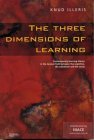 Publisher:
Copenhagen: Roskilde University Press (2004) Publisher:
Copenhagen: Roskilde University Press (2004)Book Description (at amazon.com): The Three Dimensions of Learning is an extraordinary book offering an overview and critical examination of the most significant American and European learning theories. From them it develops a coherent overall theory covering the cognitive, the emotional and the social and societal dimensions of learning, thus addressing the current issue of competence development. One chapter discusses non-learning, learning defense, and learning resistance. With its construction of a comprehensive and contemporary theory of learning, this book has sold over 25,000 copies in Danish, Swedish, and English. Now available in North America, it will be useful to adult educators dealing with human and organizational learning and development. (amazon.com) Professor Knud Illeris's comprehensive theory of learning includes a substantial critique of Kolb's theory of experiential learning. [Details to follow when I have read it! RG] view at amazon.co.uk or at amazon.com |
|
Synopsis:
Roland Meighan began researching and writing on home-based
education in 1977. Over the last twenty three years, he has
collected a considerable number of stories, case-files from the
experiences of home-based educating families. In this book he opens
fifteen of his case-files. Titles include: The road crossing, the
prospective teacher, the seminar, the kilt, the court case, the
cliff-top picnic, the speaking contest, an inspector calls, the
home-education truant, and the leaflet. The files capture some of the
variety, pathos, difficulties and excitement of the families who decide
to become 'reluctant heretics' and take charge of their own education.
Others who come into their orbit are educated in various ways too.
Families do not just take on the education of their own members, but of
members of the general population who are misinformed, conformist or
just plain bewildered. The book should be of interest to all students of education, and academics in the field of education, as well as to practising home educators of all persuasions. It would be a valuable edition to the bookshelf of any education library or office. It also has wider implications for issues of parenting in a rapidly changing society as well as for the new post-modern paradigm of the next learning system to replace the obsolete system of mass, coercive, ageist schooling. (amazon.co.uk) |
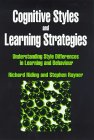 |
Synopsis: This volume reviews and integrates research on style differences in learning behaviour and describes the "cognitive styles analysis" which provides a simple and effective method of assessing style in children and adults. As both a textbook and a source of reference for professionals working in a range of contexts, it aims to help teachers and trainers reflect on and assess their effectiveness. The authors provide insights into personal and professional behaviour for cousellors and personnel professionals, and offer a framework for future research for psychologists. (Amazon.co.uk) |
|
From the Inside Flap: StudyWhiz jump starts student learning potential. StudyWhiz is a learning system that helps students unravel the mystery of how subject matter is organized so that they can learn it more efficiently and effectively. The central message of StudyWhiz is that students who practice being more thoughtful about their schoolwork will not only become more efficient learners but will also increase their capacity to learn additional material. This system guides students through MindFrames,namely Previewing, Naming, Connecting, Recapping, Constructing, Self-Testing and Reflecting. Each MindFrame is a stage of learning, a specific way in which the mind frames new material as it learns. MindFrames work powerfully to help students reduce gaps in knowledge, focus attention, enhance memory and create different ways to make sense of schoolwork. StudyWhiz helps students highlight the connectedness and relevance of ideas. Using StudyWhiz, students can build confidence and ability. Product Description: This book takes the organization of ideas introduced in the StudyWhiz for younger students to a higher level of application. Where the StudyWhiz for students in Grades 4–6 is intended to help students model the MindFrames, this version helps students apply each MindFrame as appropriate and link them together into a coherent whole. Used appropriately, this StudyWhiz is an information management system that enhances memory and transfer. It invites personal decision-making, self-assessment and expression. (Amazon.com) |
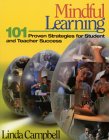 |
These active learning strategies for teachers include: • Tapping students' background knowledge • Ways to teach with active learning processes • Proven methods to teach reading to diverse learners • How to run a classroom that is gender-fair • Proven ways to make assessment meaningful • Specific suggestions for defining and meeting the needs of English language learners and other diverse student populations, plus summaries of research that explain how and why the 101 strategies work. (Amazon.co.uk) |
 |
Publisher's Description (extract):
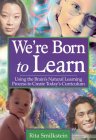
In We’re Born to Learn, Smilkstein reframes traditional education,
transforming the student who "can’t" into the student who is simply not
experiencing his or her birthright as a naturally motivated learner.
This book provides research-based, concrete strategies for creating a
student-centered curriculum in which every student can learn!
Smilkstein has broken down the Natural Human Learning Process (NHLP) into six stages from foundational knowledge through higher-level thinking. She then provides guidelines and models showing educators how to create learning experiences at each stage of the process for individuals, small groups, and whole classes so all students can experience the joy and satisfaction of success. |
 |
Review:
Everyone is born with intuition, explains author Shakti Gawain. The
problem is, most people learned to suppress the natural connection to
their intuition, and were trained to solely rely on their logical,
rational mind. "Many people who are not accustomed to being consciously
in touch with their intuition imagine that it is a mysterious force
that would come to them through some transcendent mystical experience",
Gawain writes. "In fact, intuition is a very practical, down-to-earth
tool that is always available to help us deal with the decisions,
problems, and challenges of our daily lives"...
Gawain has a long history of writing straightforward, self-help primers that cover elusive spiritual material. Once again she has done an excellent job. Developing Intuition is a sensibly organised beginner's guide to intuition that steadily paces readers through a wealth of insight. (Gail Hudson, Amazon.co.uk) |
 |
Book Description:
The Hidden Intelligence explores what intuition is and is not, and why
it is often hidden. Based on interviews with executives from Fortune
500 organizations to entrepreneurial startups, the book is full of
insights the author has gathered over the years working with creative
problem solving and ideation techniques. It brings our intuition into
the mainstream of those skills crucial to running a successful
business. (Amazon.co.uk)
From the Author: ... Tips are offered on how to tap into it whenever you need to make an important decision and do not have enough facts that point in a clear direction. Find out why a Harvard MBA, Vice Chairman of a major corporation uses a pendulum for his decision making. Learn how to invent new products,as many of the great inventors did, using this inner mind skill. |
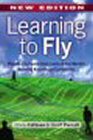
Learning
To Fly: For a full review of Learning to Fly and a comparison
with Common Knowledge see
Roger Greenaway's comparative review
See
more reviews at Amazon.co.uk
See reviews and 'inside the book' at amazon.com
Practical Lessons from One of the World's Leading Knowledge Companies
Chris Collison, Geoff Parcell
Book Description
Learning to Fly shows exactly how to put theory into practice, sharing
the tools used and the experience and insights gained by two leading
knowledge management practitioners. In Learning to Fly, Chris Collison
and Geoff Parcell share their experiences from BP, one of the world's
leading knowledge organisations. It is a practical, pragmatic workbook
packed with hints and tips to help managers put knowledge management
into action immediately.
|
Q. What's popular? A. See The Top 20 Q. What's best? A. See Best Books Q. Where are the bargains? A. They are all on one page at Books Under a Fiver Q. What's new? A. See New Books or browse the right margins in any category. Q. Where am I? A. Roger's Bookshop is part of The Active Reviewing Guide. |
|
Amazon.com Returns Policy |
|
Amazon.co.uk Returns Policy |
|---|
 See
today's Hot 100 Books at Amazon.com See
today's Hot 100 Books at Amazon.com
|
See
today's Hot 100 Books at Amazon.co.uk
 |
|
For
news of new active learning book reviews monthly tips & articles about active learning subscribe for free to Active Reviewing Tips Roger's monthly ezine for dynamic facilitators. |
To
navigate the Active Reviewing Guide Start at the Home Page or Find your Search Profile or Use the Main Search Page |
HOME |
 HELP |
